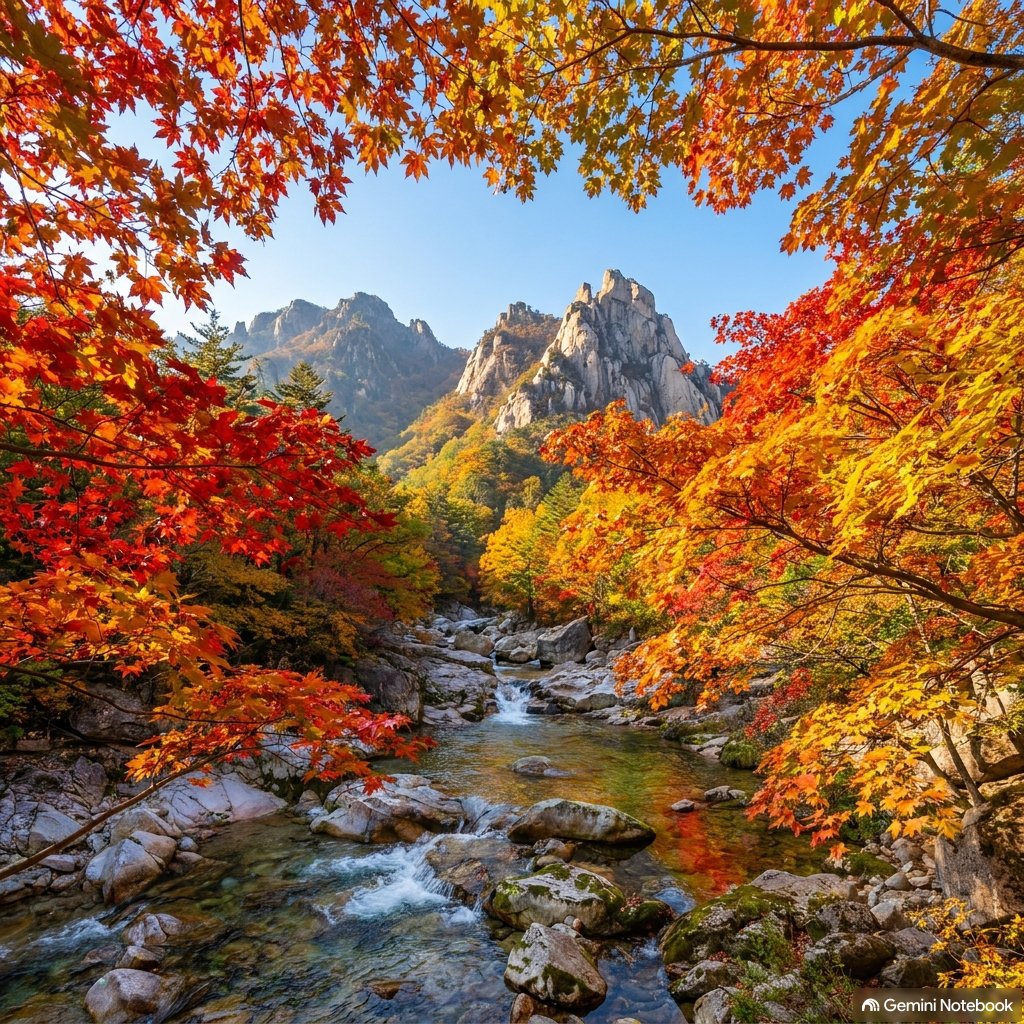
October is widely considered the best month to experience autumn foliage in Korea, and Seoraksan National Park in Sokcho, Gangwon-do, stands at the center of this seasonal spectacle. As early temperature drops arrive in the northern mountains, Seoraksan is traditionally the first major peak on the peninsula where leaves change into rich shades of crimson, orange, and vibrant gold. For anyone visiting Korea during mid-to-late October, a journey to Seoraksan offers an essential autumn experience.
Located approximately two and a half hours northeast of Seoul, Seoraksan National Park is divided into Outer Seorak, Inner Seorak, and South Seorak. Outer Seorak is the most accessible section for visitors, featuring iconic rock peaks, ancient temples, and well-maintained trail networks suitable for various fitness levels.
Key Spots and Attractions in Seoraksan A classic visit starts near the main park entrance at Sinheungsa Temple, an ancient Zen Buddhist temple established in the 7th century. The temple grounds feature a giant bronze Buddha statue surrounded by gold and red forest foliage.
Spot Link: https://www.google.com/maps/search/?api=1&query=Sinheungsa+Temple+Sokcho
From Sinheungsa, a gentle walking path leads into Cheonbuldong Valley. Known for its steep rock spires and clear mountain streams, this valley displays dense maple trees along wooden footbridges and scenic boardwalks.
Spot Link: https://www.google.com/maps/search/?api=1&query=Cheonbuldong+Valley
For panoramic mountain views without an intensive hike, the Gwongeumseong Cable Car ascends near the park entrance up to the ruins of Gwongeumseong Fortress. A short walk from the upper cable car terminal leads to rocky summits overlooking Outer Seorak cliffs and the East Sea. Spot Link: https://www.google.com/maps/search/?api=1&query=Gwongeumseong+Cable+Car
Active hikers can take the trail to Ulsanbawi Rock, a dramatic granite peak with six jagged summits. The route passes Heundel Bawi (Rocking Rock) before ascending steel stairs to sweeping views of autumn forests.
Spot Link: https://www.google.com/maps/search/?api=1&query=Ulsanbawi+Rock
Access from Seoul to Seoraksan Reaching Seoraksan from Seoul is convenient via public transport. Express buses depart from Seoul Express Bus Terminal or Dong Seoul Terminal to Sokcho Terminal in about 2 to 2.5 hours. From Sokcho, local city bus 7 or 7-1 takes you directly to the entrance of Seoraksan National Park in 35 minutes.
Local Food in Sokcho Nearby Combining mountain scenery with seaside culinary culture, Sokcho offers memorable local dishes. At Sokcho Tourist & Fishery Market, local vendors serve Ojingeo Sundae (stuffed squid pan-fried in egg batter) and Abai Sundae. Food Link: https://www.google.com/maps/search/?api=1&query=Sokcho+Tourist+and+Fishery+Market
Manseok Dakgangjeong inside Sokcho Market is famous for crunchy sweet and spicy fried chicken that stays delicious even when cold.
Food Link: https://www.google.com/maps/search/?api=1&query=Manseok+Dakgangjeong
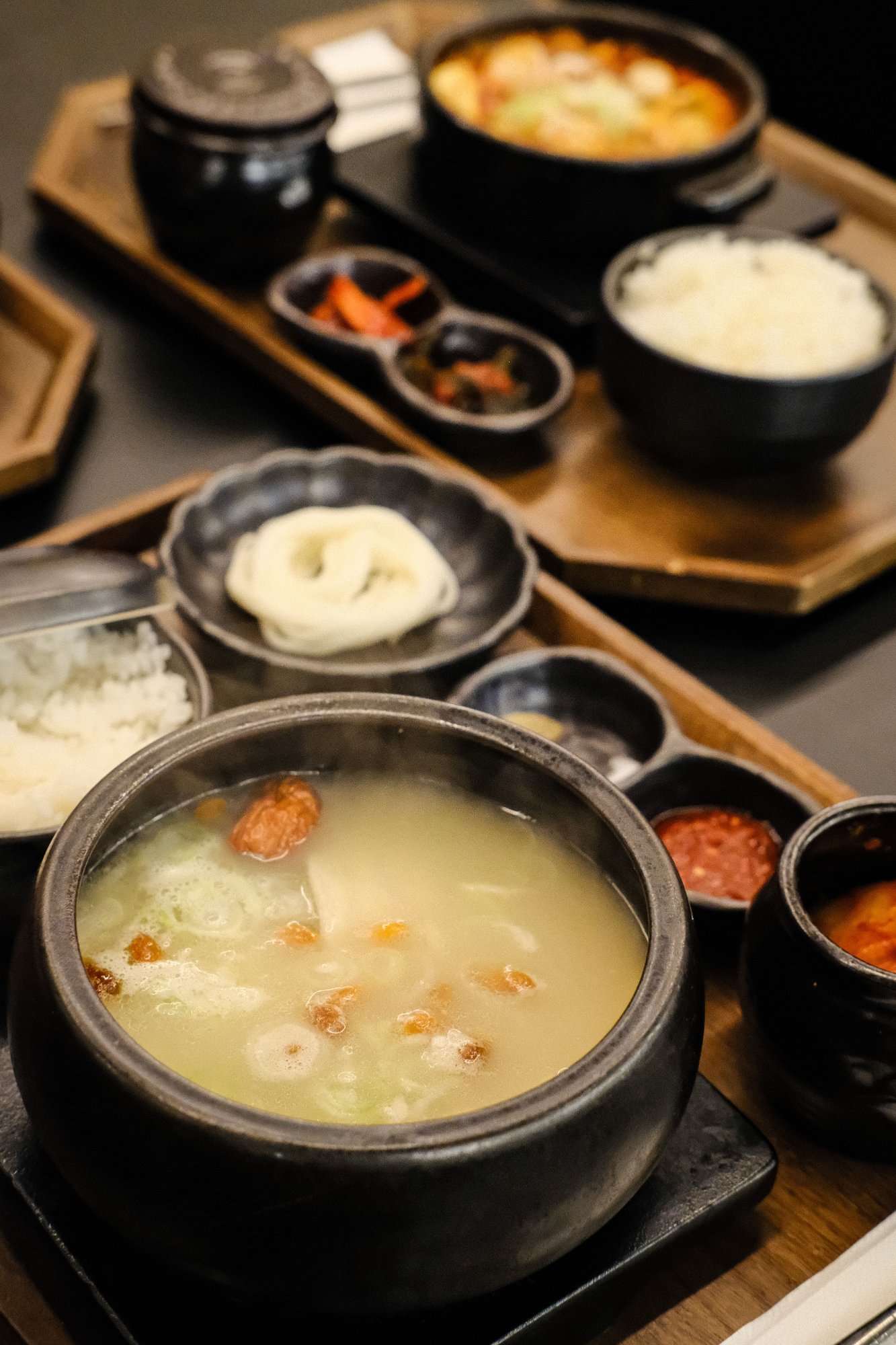
In nearby Haksaepyong Village, a warm bowl of Sundubu (soft tofu in pure spring water) provides a comforting meal after mountain walks.
Food Link: https://www.google.com/maps/search/?api=1&query=Haksapyyeong+Soft+Tofu+Village
Practical Tips for October October morning temperatures drop to 5°C-8°C, while afternoons reach 16°C-18°C. Wearing layered clothing and sturdy shoes ensures comfort. Arriving before 8:00 AM helps avoid cable car lines and traffic.
If this guide was helpful to you, please share it with friends who have travel plans to Korea!
#Seoraksan #KoreaAutumn #Sokcho #AutumnFoliage #VisitKorea #KoreaTrip #SeoraksanNationalPark #FallInKorea #OctoberInKorea #SokchoTravel #EastSea #Gwongeumseong #Ulsanbawi #Sinheungsa #KoreaNature #KoreaHiking #SouthKorea #KoreaTravelGuide #KoreanFoliage #SokchoFood