Whenever we explore the vibrant food culture of Korea, there is one humble yet magnificent ingredient we will encounter at almost every meal: Dubu, or Korean tofu. Today, I am thrilled to introduce the soul-comforting world of Korean tofu dishes, just like a local sharing their everyday hometown favorites. Many people think of tofu as just a plain health food, but here, it is a deeply versatile canvas for incredibly savory, spicy, and rich flavors. Furthermore, Korean tofu dishes are an absolute paradise for those maintaining a plant-based diet! Let us dive deep into the mouth-watering variations of tofu, focusing on how incredibly versatile it can be, and discover the absolute best ways to eat and enjoy them.
The Magic of Sundubu (Extra Soft Tofu) While standard tofu is pressed into firm blocks, Sundubu is unpressed, remarkably silky, and custard-like. It is a wildly versatile ingredient that we can enjoy in several distinct ways depending on our cravings.
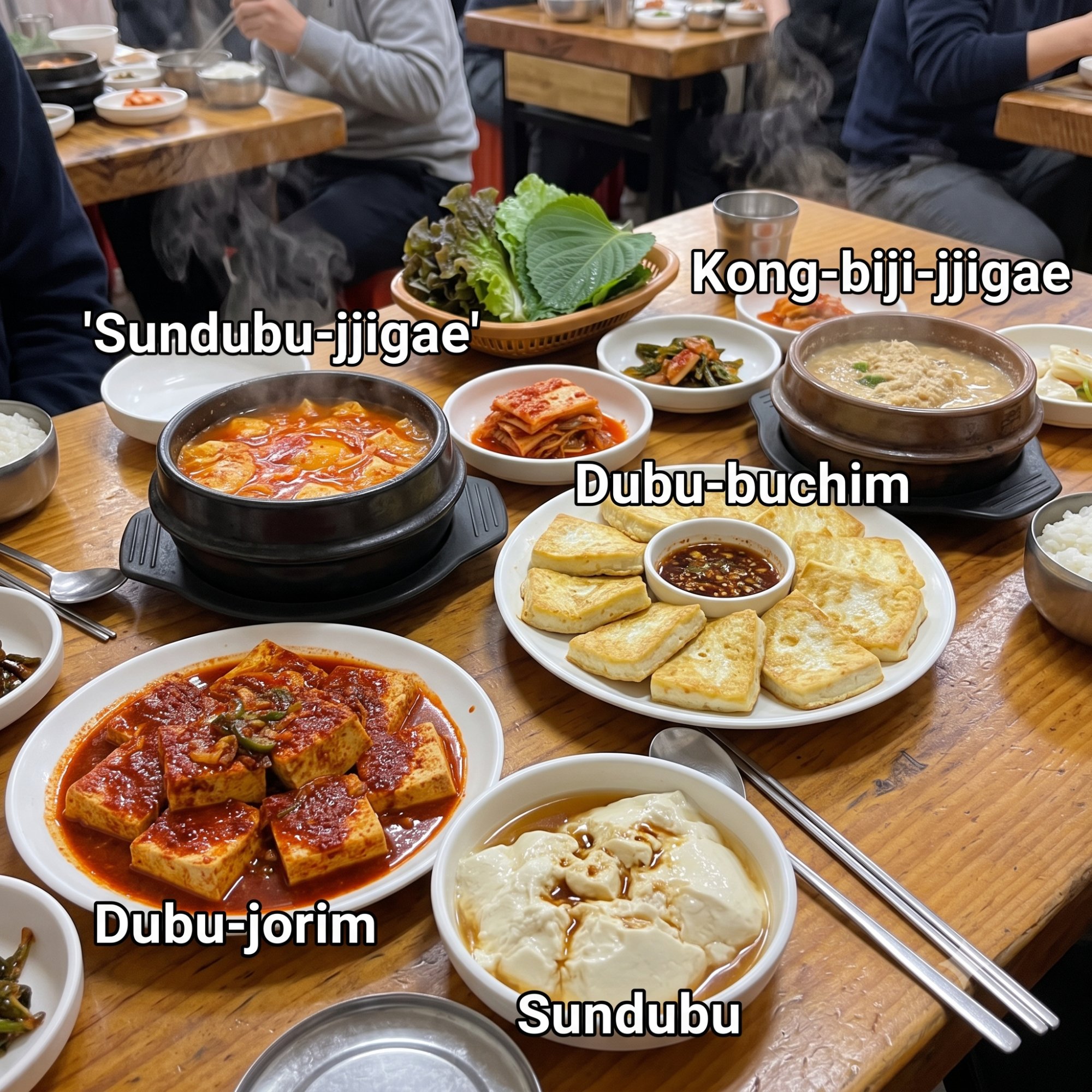
Warm Sundubu with Yangnyeomjang: The absolute purest way to enjoy the delicate, nutty flavor of freshly made soft tofu is to eat it warm, straight out of the pot, without any spicy broth. We simply drizzle a spoonful of Yangnyeomjang—a traditional sauce made of soy sauce, sesame oil, gochugaru (Korean chili flakes), minced garlic, and chopped green onions—directly over the pristine white tofu. How to enjoy it: Do not mix it aggressively! Gently scoop a spoonful of the warm, cloud-like tofu with a little bit of the savory sauce on top. It melts in your mouth instantly, offering a deeply wholesome flavor.
Sundubu-jjigae (Spicy Soft Tofu Stew): When we crave something bold, Sundubu transforms into a violently bubbling, spicy stew served in a black earthenware pot called a Ddukbaegi. How to enjoy it: When the stew arrives, it will be boiling rapidly. We must immediately crack a raw egg directly into the bubbling broth! Take a spoonful of the soft tofu and pour it over the rice. Important note for vegetarians: This stew traditionally contains ingredients like fresh clams, shrimp, or minced pork to create a deeply savory broth. If you do not eat meat or seafood, always explicitly ask the restaurant if they can prepare a vegetarian version using only a vegetable or kelp broth.
Dubu Kimchi (Tofu with Stir-fried Kimchi) Let us move on to an iconic dish that perfectly captures the heart of Korean drinking culture and comfort food. Instead of serving plain pan-fried tofu, restaurants and local pubs most commonly serve a spectacular dish called "Dubu Kimchi." This features thick, warm, pillowy slices of freshly boiled or lightly pan-fried tofu arranged beautifully around a heaping mound of Bokkeum Kimchi (stir-fried Kimchi). The Kimchi is deeply caramelized and stir-fried with sugar, sesame oil, and onions, transforming its sharp acidity into a rich, sweet, and intensely savory flavor profile.
How to enjoy it: To eat Dubu Kimchi like a true local, take your chopsticks and cut a bite-sized piece of the warm tofu. Then, pick up a generous pinch of the sweet and spicy stir-fried Kimchi and place it right on top of the tofu. Eat them together in one perfect bite! The contrast between the mild, nutty tofu and the bold, rich Kimchi is absolute perfection.
Vegetarian Warning: The stir-fried Kimchi in this dish is very often cooked with thinly sliced pork belly to add rich fat and flavor. If you are a strict vegetarian, you must ask the kitchen to stir-fry the Kimchi exclusively with vegetable oil and omit the pork!
Drink Pairing: We absolutely must pair Dubu Kimchi with Makgeolli (traditional Korean milky rice wine). The sweet fizziness of the Makgeolli washes away the spice and richness flawlessly.
Dubu-jorim (Braised Tofu) Thick slices of tofu are pan-fried first so they hold their shape, then slowly simmered in a rich, spicy broth made from soy sauce, garlic, sugar, and plenty of chili flakes. As it braises, the tofu acts like a sponge, completely soaking up the intensely flavorful sauce. This is another phenomenal side dish for those on a plant-based diet.
How to enjoy it: Here, we call dishes like this "Bap-doduk" (Rice Thief), because its intense flavor makes a bowl of plain white rice disappear in an instant! Place a generous piece of the braised tofu on top of warm rice, gently mash it into the grains so the sauce deeply mixes in, and scoop it all up together.
Kong-biji-jjigae (Ground Soybean Stew) This dish beautifully showcases traditional cooking. When making tofu, soaked soybeans are ground and pressed to extract soy milk. The remaining finely ground soybean pulp is called "Biji." We use it to make Kong-biji-jjigae, a thick, creamy, slightly grainy stew.
How to enjoy it: Mix it thoroughly into your rice so every single grain is coated in the creamy stew. It pairs exceptionally well with Kkakdugi (cubed radish Kimchi).
Crucial Warning for Vegetarians: Because "Biji" is made entirely of soybeans, many mistakenly assume this stew is completely meat-free. However, traditional Kong-biji-jjigae is almost always cooked with pungent fermented Kimchi and fatty cuts of minced pork to balance the earthy flavor of the soybeans!
Where to Experience the Best Tofu To experience the absolute pinnacle of fresh, handmade Korean tofu, we highly recommend visiting Hwanggeum Kongbat (Golden Bean Field) in Seoul. This highly respected local restaurant is famous for painstakingly making its tofu fresh from scratch every single morning, offering an unforgettable depth of flavor.
Check out the location on Google Maps here:

Please share this with friends who are planning a trip.
#KoreanFood #KoreanTofu #Dubu #VegetarianKorea #Sundubu #SundubuJjigae #Kongbiji #DubuJorim #DubuBuchim #SeoulEats #LocalEats #Foodie #TravelKorea #AuthenticFood #KoreanCulture #SeoulTrip #Ssam #Ssamjang #HealthyFood #DeliciousFood