Hey friends! Welcome back to this culinary journey through the vibrant world of Korean cuisine. Today, I will introduce you to the undisputed king of Korean late-night dining and communal group feasts. When locals gather for a hearty dinner, celebrate after a long week, or order delivery late at night (a culture called "Yasik"), there is one legendary dish that always comes to mind: Jokbal.
If you truly want to eat like a local, mastering this spectacular pork feast is an absolute must. Let me guide you through exactly what this dish is, how to choose the best cuts of meat like a pro, the secret side dishes that make it shine, the crucial golden rule of making a lettuce wrap, and a fascinating market culture you should know about!
What Exactly is Jokbal?
Let us start with the basics. Jokbal translates to braised pig's trotters. I know that eating trotters might sound a little adventurous to you at first, but I promise that one single bite will instantly change your mind!
To make Jokbal, the trotters are thoroughly cleaned and then slowly simmered for several hours in a deeply flavorful, dark, and complex broth. This boiling liquid is packed with soy sauce, fresh ginger, whole garlic, rice wine, and aromatic spices like star anise, cinnamon, and licorice root. Many famous restaurants actually have a "mother broth" that they continuously boil and replenish with fresh ingredients for decades!
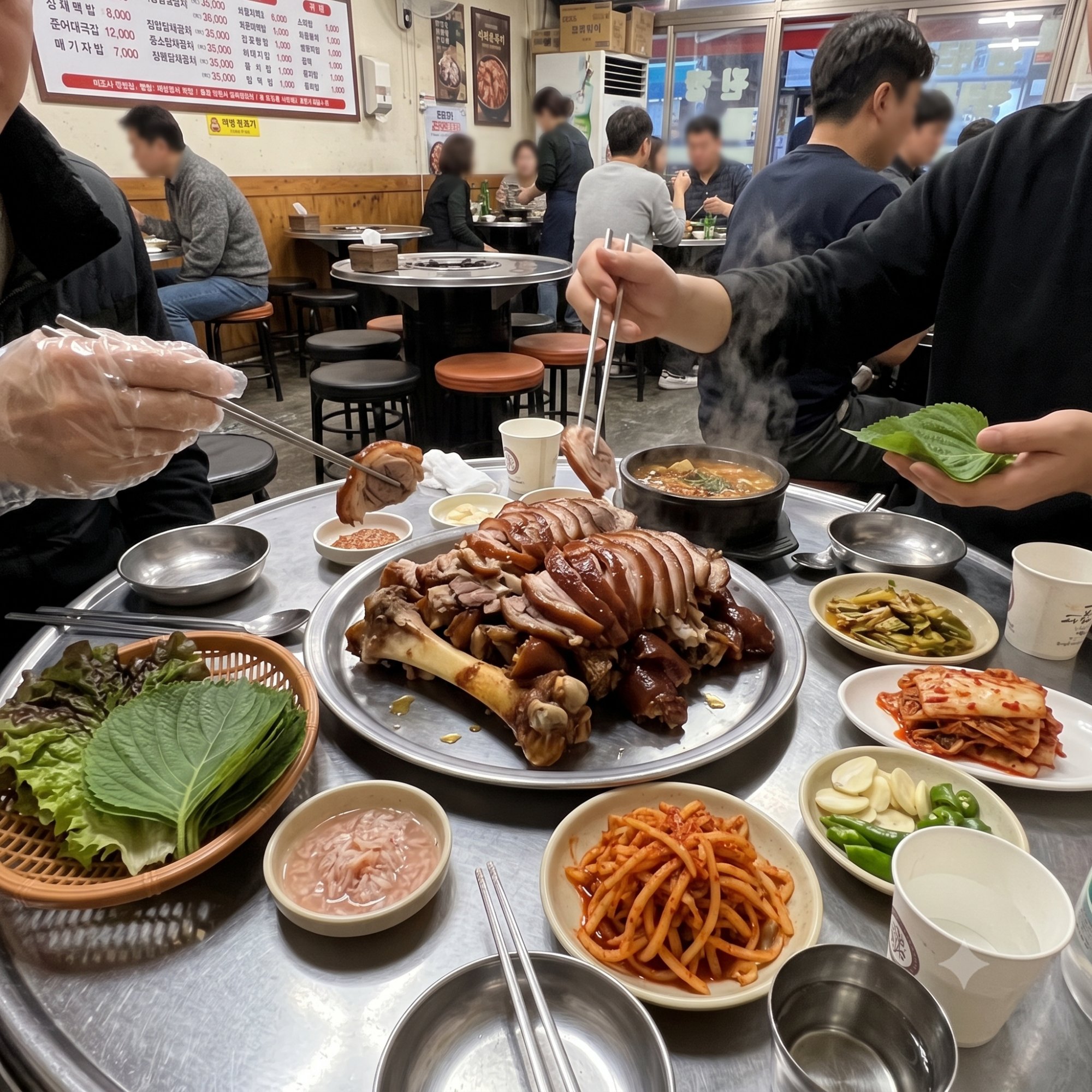
This meticulous braising process completely transforms the meat. When it arrives at your table, it is expertly deboned and thinly sliced, revealing a beautiful visual contrast. The inner meat is incredibly tender and savory, while the dark brown outer skin is gloriously gelatinous, sticky, and slightly sweet. Jokbal is famous here not just for its rich flavor, but because the chewy skin is packed with natural collagen!
Pro Tip: Front vs. Hind Leg
Here is a major insider secret: when you visit a specialized Jokbal restaurant, the menu will often require you to choose between the front leg (Ap-dari) and the hind leg (Dwit-dari). Knowing the difference is the ultimate local flex!
Ap-dari (Front Leg): Because pigs carry much more of their body weight on their front legs, this cut has far more developed muscles interwoven with a significantly higher fat content. The result is an incredibly tender, richer, and far more gelatinous bite. It is usually slightly more expensive and tends to sell out much faster because locals absolutely love that melt-in-your-mouth texture!
Dwit-dari (Hind Leg): The hind leg is significantly leaner. It has a much higher ratio of actual meat to fat and skin, giving it a firmer, meatier chew. If you prefer a cleaner, less greasy bite and enjoy dense, protein-packed pork, this is the perfect choice for you.
The Secret Weapon: Saeujeot & The One-Bite Ssam Rule
You cannot just eat the pork on its own! To eat like a true local, you must utilize the essential dipping sauces and special banchan (side dishes) that perfectly complement the meat.
Saeujeot (Salted Shrimp): Whenever you order Jokbal, you will always receive a small dish of tiny, fermented salted shrimp. You absolutely must dip your pork into this! The intense, briny umami cuts right through the richness of the pork perfectly. Furthermore, locals widely believe that the specific enzymes in this fermented shrimp help you digest the heavy pork smoothly!
The One-Bite Ssam Rule: You will also get fresh lettuce, perilla leaves (kkaennip), spicy radish salad (Musaengchae), and raw garlic. Making a Ssam (wrap) is essential, but there is one absolute, non-negotiable rule you must follow: a Ssam must be eaten in ONE single bite! You never, ever bite a Ssam in half. Biting it ruins the structural integrity, spilling the sauces and fillings everywhere, which is considered quite messy. Because it has to go into your mouth all at once, you must craft it carefully so it is small enough to fit! Do not overstuff it. Lay down a small piece of lettuce, add a perfectly sized piece of warm Jokbal dipped in Saeujeot, a modest pinch of the sweet radish salad, and a single slice of garlic dipped in Ssamjang (soybean paste). Wrap it tightly into a neat, compact little ball, and pop the entire thing into your mouth. The explosion of savory, sweet, crunchy, and chewy textures happening all at once is the true magic of Korean dining!
The Market Secret: "Service" Culture
Now, here is a fascinating insider tip about eating Jokbal at traditional markets. In Korea, we have a highly beloved dining concept called "Service" (Seo-bi-seu), which simply means complimentary food on the house.
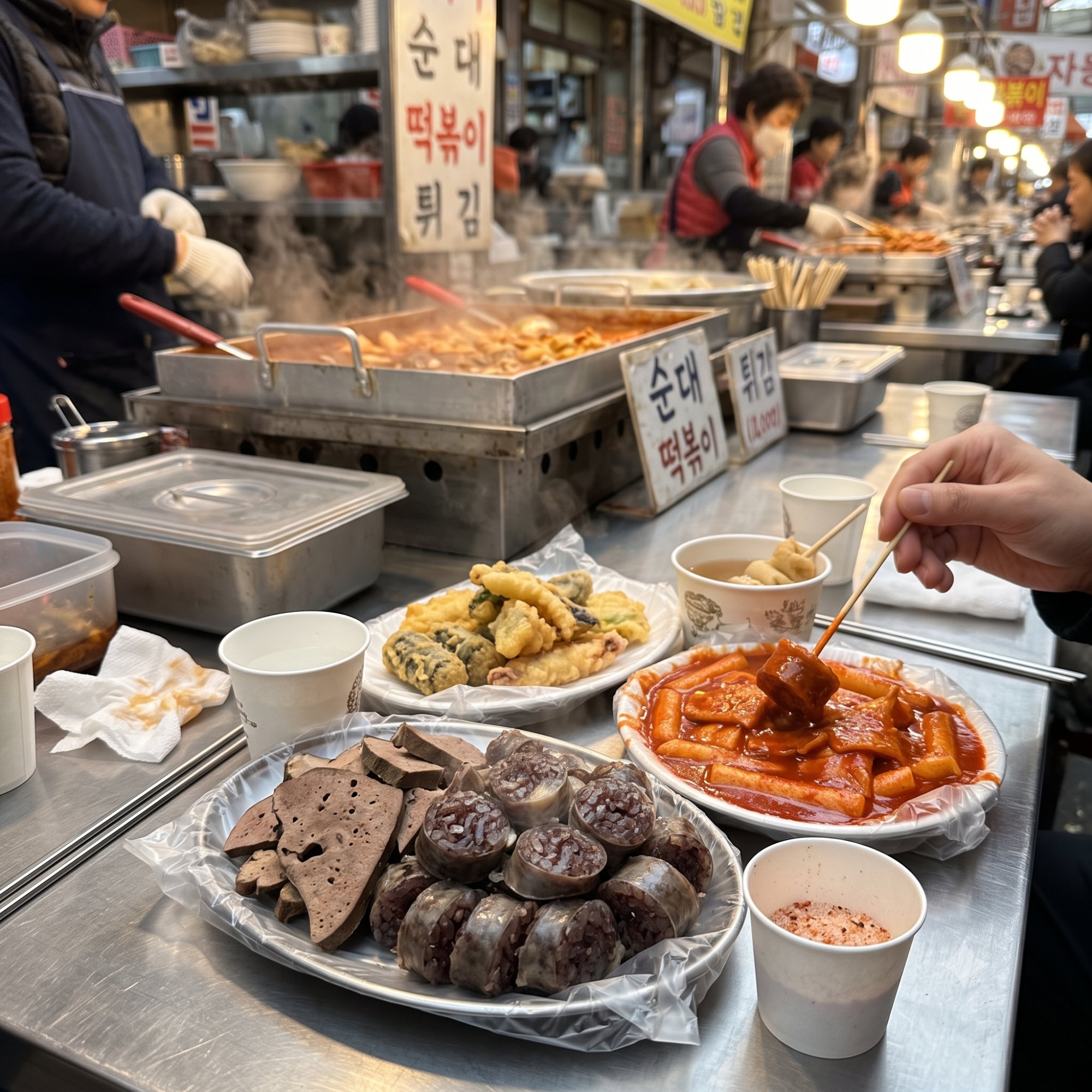
If you visit certain traditional market alleys that specialize in Jokbal, you might get to experience this incredible generosity firsthand. At these specific market stalls, when you order a plate of Jokbal, the vendor will frequently bring out a bubbling clay pot of Sundaeguk (Korean blood sausage and pork soup)—for absolutely free!
However, please keep in mind that this is not a strict rule everywhere! It is a special, affectionate gesture mostly found in specific traditional market alleys. You do not need to explicitly order or pay for the soup at these spots. Simply order your Jokbal, and if you are at a generous market stall, they will bring the soup out to you as a pleasant surprise. The rich, slightly spicy pork bone broth serves as the ultimate palate cleanser!
Where to Experience This Feast
To experience this epic pork feast, I highly recommend visiting these iconic spots:
Gongdeok Jokbal Alley (Seoul): If you want to experience the legendary "free Sundaeguk service" culture that I mentioned, this traditional market alley is the absolute mecca. You will be seated in a bustling environment surrounded by locals. Just remember: order the Jokbal and let them surprise you with the soup! Check it out on Google Maps: https://www.google.com/maps/search/Gongdeok+Jokbal+Alley
Manjok Ohyang Jokbal (City Hall, Seoul): If you are looking for a slightly more refined and elevated experience, this Michelin Bib Gourmand-awarded restaurant is famous for its incredibly tender, sweet, and aromatic five-spice Jokbal. Find it right here: https://www.google.com/maps/search/Manjok+Ohyang+Jokbal+Seoul
This magnificent pork feast will be an unforgettable highlight of your culinary adventure.
Please share this with friends who are planning a trip.
#Jokbal #KoreanFood #SeoulEats #LocalFood #KoreanCulture #PorkFeast #Ssam #Foodie #FoodTravel #SeoulTrip #EatLikeALocal #KFood #AsianCuisine #TravelKorea #KoreanPork #Gongdeok #LateNightEats #Delicious #DiscoverKorea #SeoulFood